
Why Strength Training Matters More Than Ever After 40
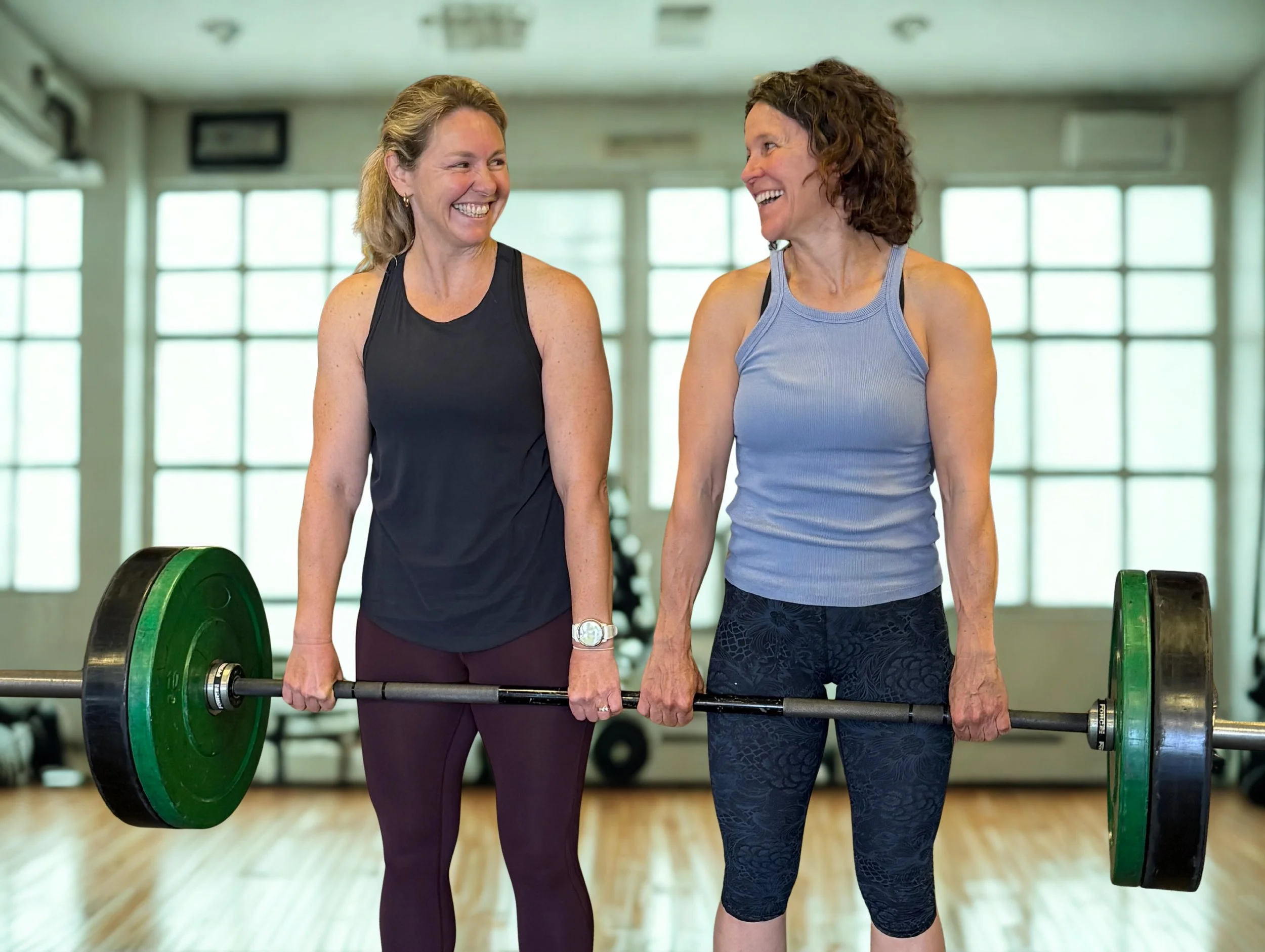
Many women arrive in their 40s doing the same forms of exercise they’ve always done — walking, running, yoga, Pilates or the occasional fitness class.
These forms of movement are valuable. They support cardiovascular health, mental wellbeing and general mobility. But as our bodies move into midlife, they are no longer enough on their own to protect long-term health.
From our 40s onwards, our physiology begins to change in ways that make strength training essential — not optional. It becomes one of the most powerful tools we have to support bone density, metabolism, joint health, hormonal balance and functional independence as we age.¹
Below are some of the key reasons it matters so much.
We Start Losing Muscle Mass (Sarcopenia)
One of the most significant physiological changes that occurs with age is the gradual loss of muscle mass, known as sarcopenia. This process begins as early as our 30s but accelerates through perimenopause and menopause as hormonal changes influence how our bodies maintain lean tissue.¹²
As muscle declines, strength naturally decreases. Movements that once felt effortless — carrying groceries, lifting children or grandchildren, getting up from the floor — can begin to feel more demanding. Reduced muscle mass also contributes to a higher risk of injury and a loss of physical confidence in daily life.⁷
Strength training provides the stimulus the body needs to maintain and rebuild this tissue. By working muscles against meaningful resistance, we signal the body to preserve lean mass, supporting both strength and function long term.¹
Bone Density Declines — Especially Around Menopause
Bone health becomes a central consideration for women as they approach menopause. Oestrogen plays a protective role in maintaining bone density, and as levels decline, bone loss can increase. Most women lose up to 10% of their bone density in the first five years after menopause.⁹
Without intervention, this increases the risk of osteopenia, osteoporosis and fragility fractures later in life. While activities such as walking are beneficial for overall health, they do not generate enough load to meaningfully strengthen bone.⁴
Bones respond to load. Resistance training, particularly when progressively increased over time, provides stimulus to the skeletal system, and remains one of the most effective non-pharmacological strategies for maintaining and improving bone density.²³¹⁰
Joint Pain and Injury Risk Increase
Many of the aches and pains women experience in midlife are often attributed simply to ageing. However, reduced muscular strength frequently plays a far greater role than the passage of time itself.⁷
When muscles surrounding joints weaken, passive structures such as ligaments, tendons and joint surfaces are required to absorb more load. This can contribute to common presentations such as knee pain, hip discomfort, shoulder issues and lower back pain.
Strength training helps restore muscular support around these joints. As strength improves, load is distributed more efficiently, joint stability increases and movement mechanics become more optimal. Over time, this can significantly reduce pain and lower the likelihood of injury.⁸
For women already experiencing discomfort, physiotherapy-led strength programs ensure exercises are introduced and progressed safely.
Balance and Fall Risk Become More Relevant
Balance is not something most people think about in their 30s and 40s, but it becomes increasingly important with age. Falls remain one of the leading causes of injury in women over 50 and are strongly linked to fractures and loss of independence.⁹
Strength training plays a key role in fall prevention. By improving lower limb strength, coordination and proprioception, it enhances the body’s ability to react to instability. Movements such as stepping, catching balance or navigating uneven ground all rely on strength as much as balance itself.⁸
Maintaining these physical capacities becomes a critical investment in long-term mobility and safety.
Hormonal Changes Affect Training Needs
Perimenopause and menopause bring a cascade of hormonal shifts that influence how women feel and respond to exercise. Recovery can feel slower, sleep more disrupted and energy levels less predictable.
Strength training provides a powerful counterbalance to many of these changes. It supports lean muscle retention, contributes to metabolic health and stimulates endorphin release, which can positively influence mood and wellbeing.¹⁶
Emerging research also shows resistance training can attenuate menopause-related declines in muscle mass and strength, reinforcing its role as a first-line lifestyle intervention during this transition.¹²
Rather than avoiding exercise during this phase, appropriately programmed strength training can become one of the most supportive interventions available.
Strength Supports Pelvic Floor Function
For women who have had children, pelvic floor considerations are often front of mind when beginning strength training. There has historically been concern that lifting weights may worsen symptoms such as incontinence or prolapse.
In reality, when strength training is appropriately prescribed, it can enhance pelvic floor function rather than compromise it. Coordinated breathing, pressure management and progressive loading help the pelvic floor work in synergy with the abdominal and spinal support systems.
This is where guidance from clinicians trained in both women’s health and strength rehabilitation is particularly valuable. With the right approach, women can build strength confidently while supporting pelvic floor health.
Stronger For Life — Not Just For Now
Strength training after 40 isn’t about chasing personal bests or aesthetic goals — it’s about building a body that supports you for decades to come. It’s about protecting bone health, maintaining muscle, supporting metabolism and staying physically independent as you age.
And it’s never too late to start.
Train With Us at Together Strong
At Together Strong Physio, we specialise in physiotherapy-led strength training for women in midlife and beyond.
Our programs are designed to support:
Bone health and osteoporosis management
Menopause and hormonal transitions
Safe return to strength after injury or pregnancy
Building confidence with lifting
Long-term strength for healthy ageing
Whether you’re completely new to strength training or ready to progress your loading safely, we guide you in a supportive, evidence-based environment.
Because getting stronger isn’t just about now — it’s about staying strong for life.
COMING in april
Reference List
¹ Westcott WL. Resistance training is medicine: effects of strength training on health. Curr Sports Med Rep. 2012;11(4):209–216.
² Watson SL, Weeks BK, Weis LJ, Horan SA, Beck BR. Heavy resistance training is safe and improves bone, function, and stature in postmenopausal women with low bone mass: the LIFTMOR randomized controlled trial. J Bone Miner Res. 2015;30(3):489–499.
³ Beck BR, Daly RM, Singh MAF, Taaffe DR. Exercise and Sports Science Australia (ESSA) position statement on exercise prescription for the prevention and management of osteoporosis. J Sci Med Sport. 2017;20(5):438–445.
⁴ Howe TE, Shea B, Dawson LJ, et al. Exercise for preventing and treating osteoporosis in postmenopausal women. Cochrane Database Syst Rev. 2011;(7):CD000333.
⁵ Guadalupe-Grau A, Fuentes T, Guerra B, Calbet JAL. Exercise and bone mass in adults. Sports Med. 2009;39(6):439–468.
⁶ Strasser B, Schobersberger W. Evidence for resistance training as a treatment therapy in obesity. J Obes. 2011;2011:482564.
⁷ Hunter GR, McCarthy JP, Bamman MM. Effects of resistance training on older adults. Sports Med. 2004;34(5):329–348.
⁸ Kemmler W, von Stengel S. Exercise and osteoporosis-related fractures: perspectives and recommendations of the Sports and Exercise Scientist. Phys Sportsmed. 2011;39(1):142–157.
⁹ Australian Institute of Health and Welfare. Osteoporosis and fracture risk in Australia. AIHW; 2023.
¹⁰ Daly RM, Dalla Via J, Duckham RL, Fraser SF, Helge EW. Exercise for the prevention of osteoporosis in postmenopausal women: an evidence-based guide. Nutrients. 2019;11(5):1021.
¹¹ Watson SL, Weeks BK, Beck BR. High-intensity resistance and impact training improves bone mineral density and physical function in postmenopausal women: follow-up of the LIFTMOR trial. Osteoporos Int. 2018;29(1):123–132.
¹² Author(s). Heavy resistance training and musculoskeletal outcomes in midlife women. Scientific Reports. 2025. Available at: https://www.nature.com/articles/s41598-025-94510-3